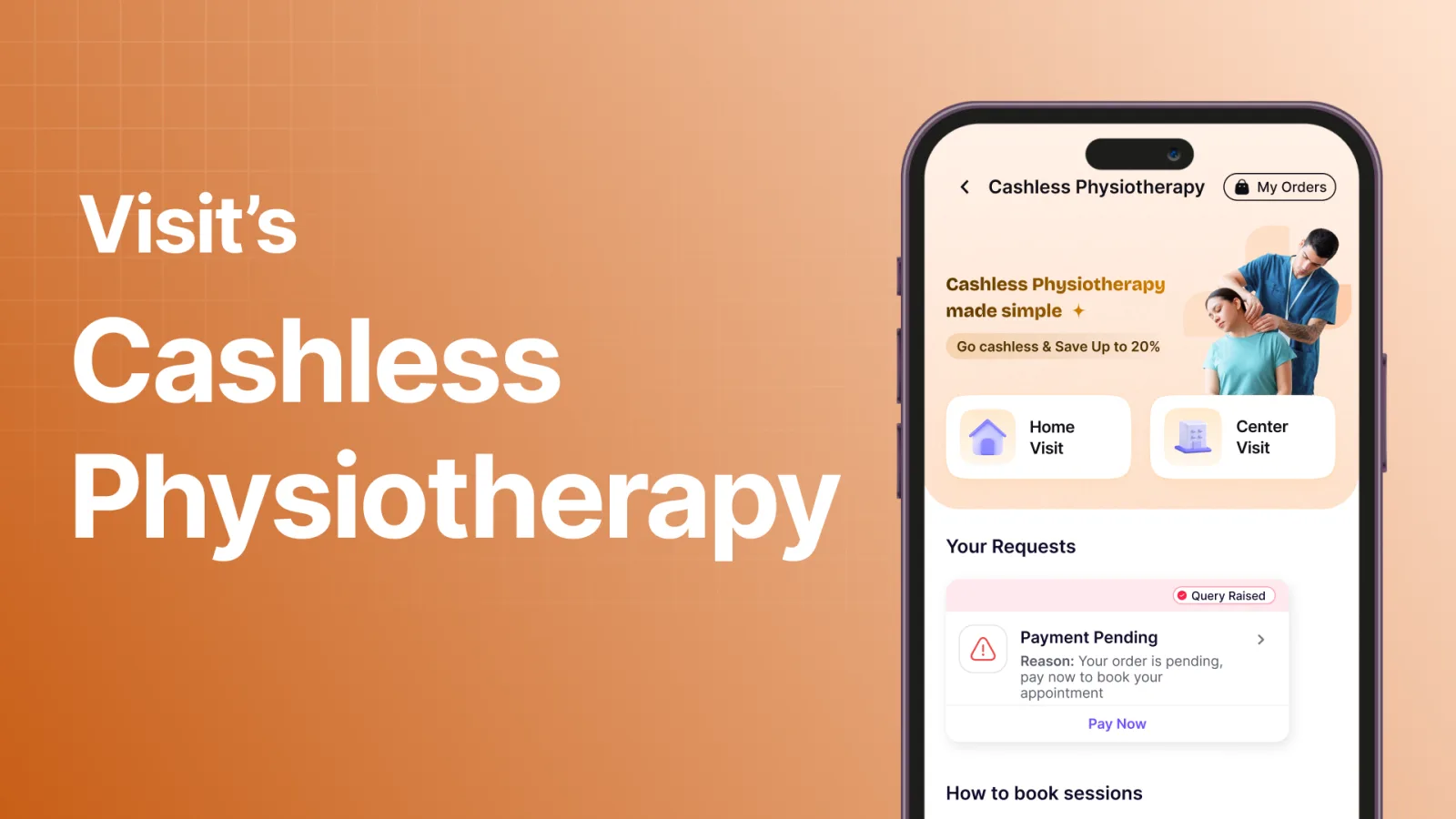
01The ask
June 2025. Our MD called: some of our largest insurance and corporate partners wanted cashless physiotherapy for their members. We already reimbursed physio sessions, so demand was proven. The brief was one line: build it and go live as soon as possible.
Simple ask. Not a simple build.
02The journey, in five frames
What it feels like from the member's side, and then from everyone else's. draft captions
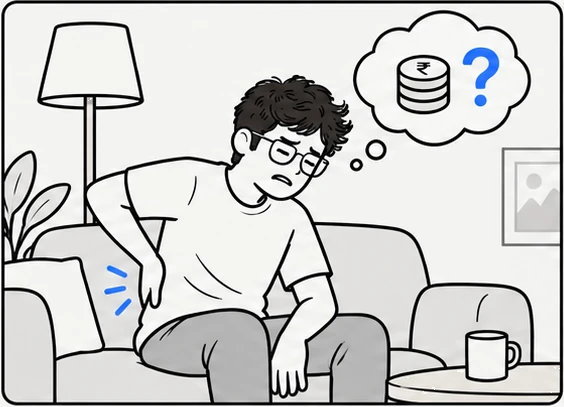 1Back pain, and who pays?
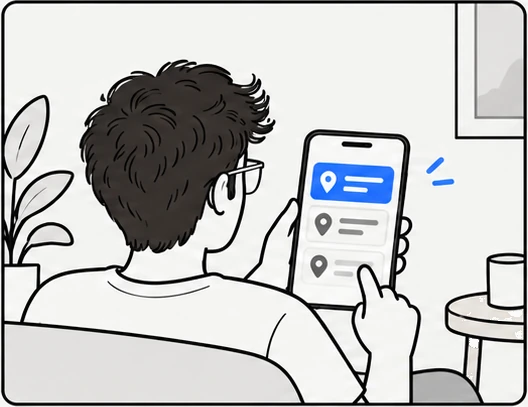 2Pick a nearby centre.
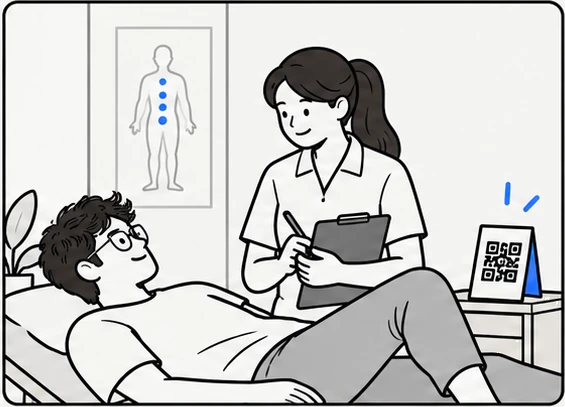 3Check in with a QR code.
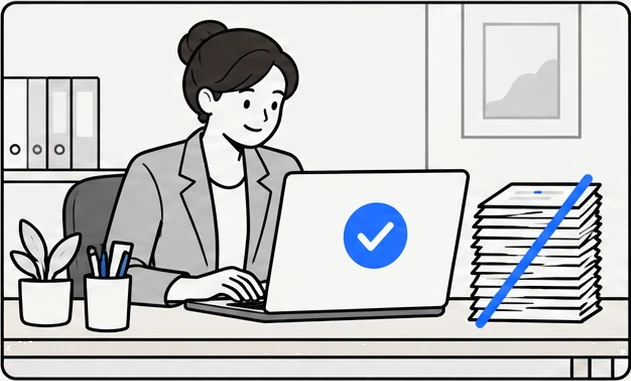 4The sponsor approves. No claim to file.
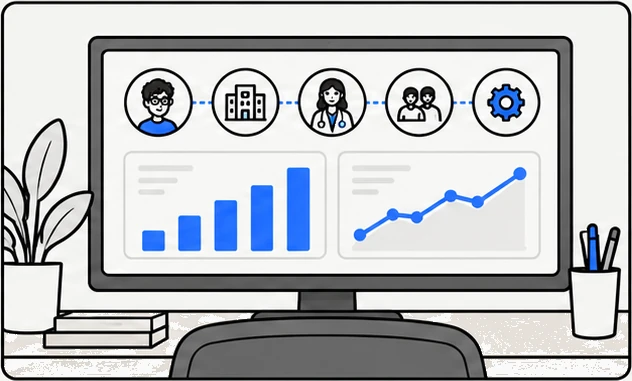 5Five users, one dashboard.
03Five users, one order
Visit Health is a multi-sided platform. Every booking touches five people, each with their own interface and their own idea of "done".
My job was to hold all five in my head at once and make the flow work for everyone who touches the order.
04Alignment was the product
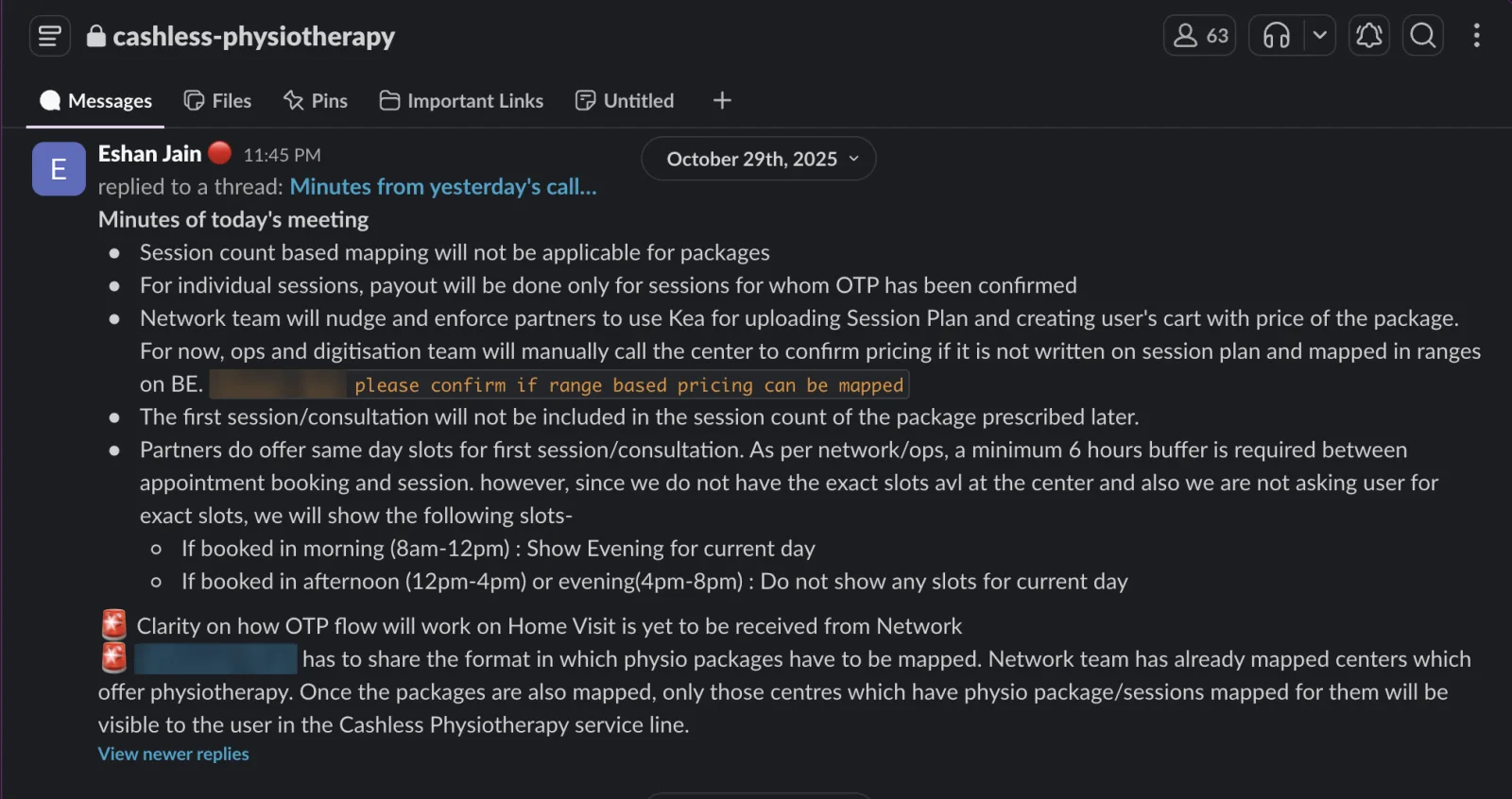
We put every department head in one room: ops, network, support, doctors, tech, product, design. I mapped the full journey in Lucidchart and took it through round after round of pushback. It took a couple of months.
"Alignment is the actual product work. That's not overhead; that is the job."
05The redesign nobody wanted
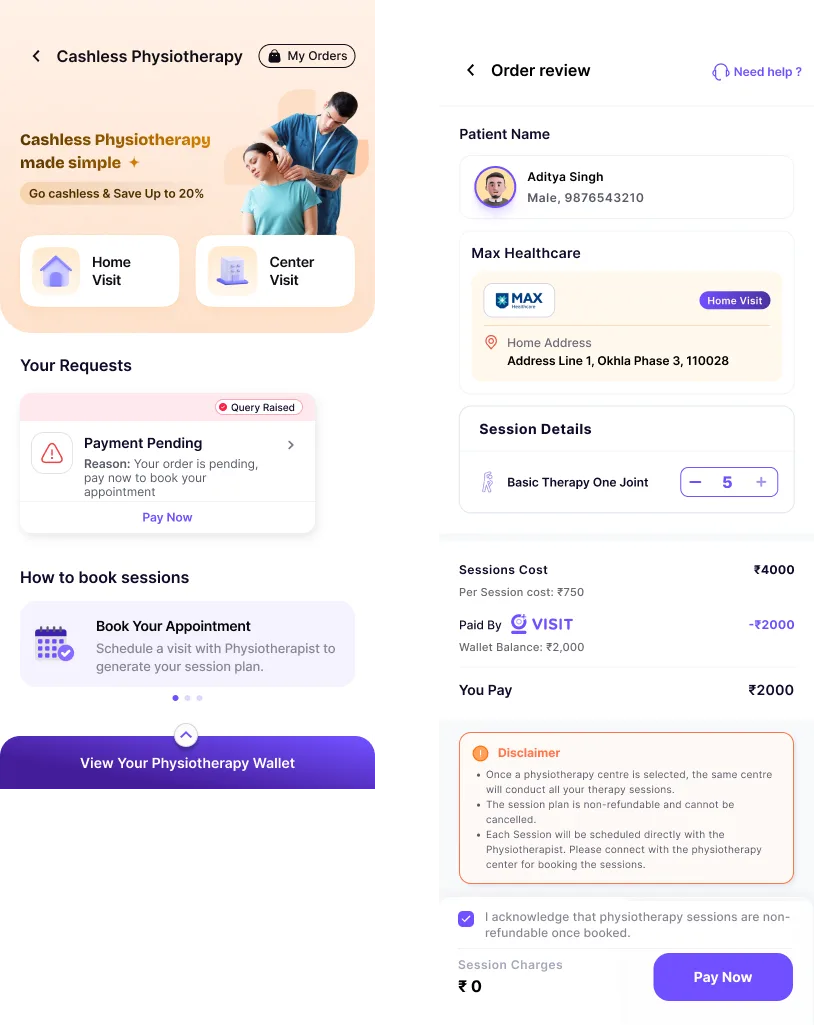
We found no aggregator offering cashless physio, so there was nothing to copy. After another round of approvals, the CEO liked the journey but wanted the app itself to nudge people to book more sessions. So we started over, and the second version was better in every way.
06The messy middle
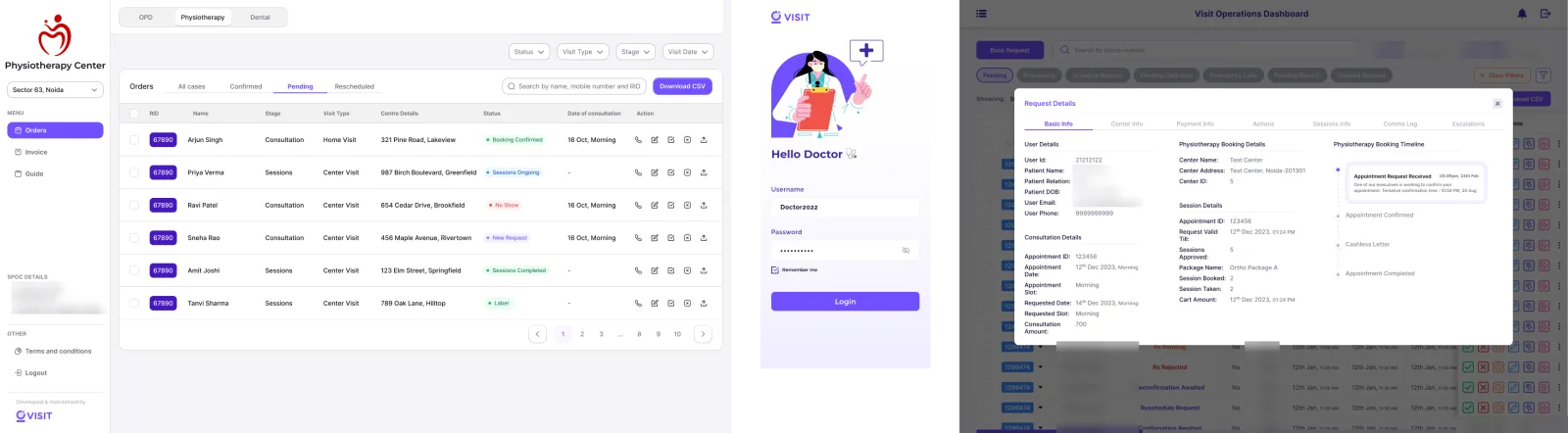
Backend went first, then Android, iOS and web built against real endpoints. In parallel I ran the partner dashboard, doctor panel, ops dashboard, network onboarding, message templates and analytics events.
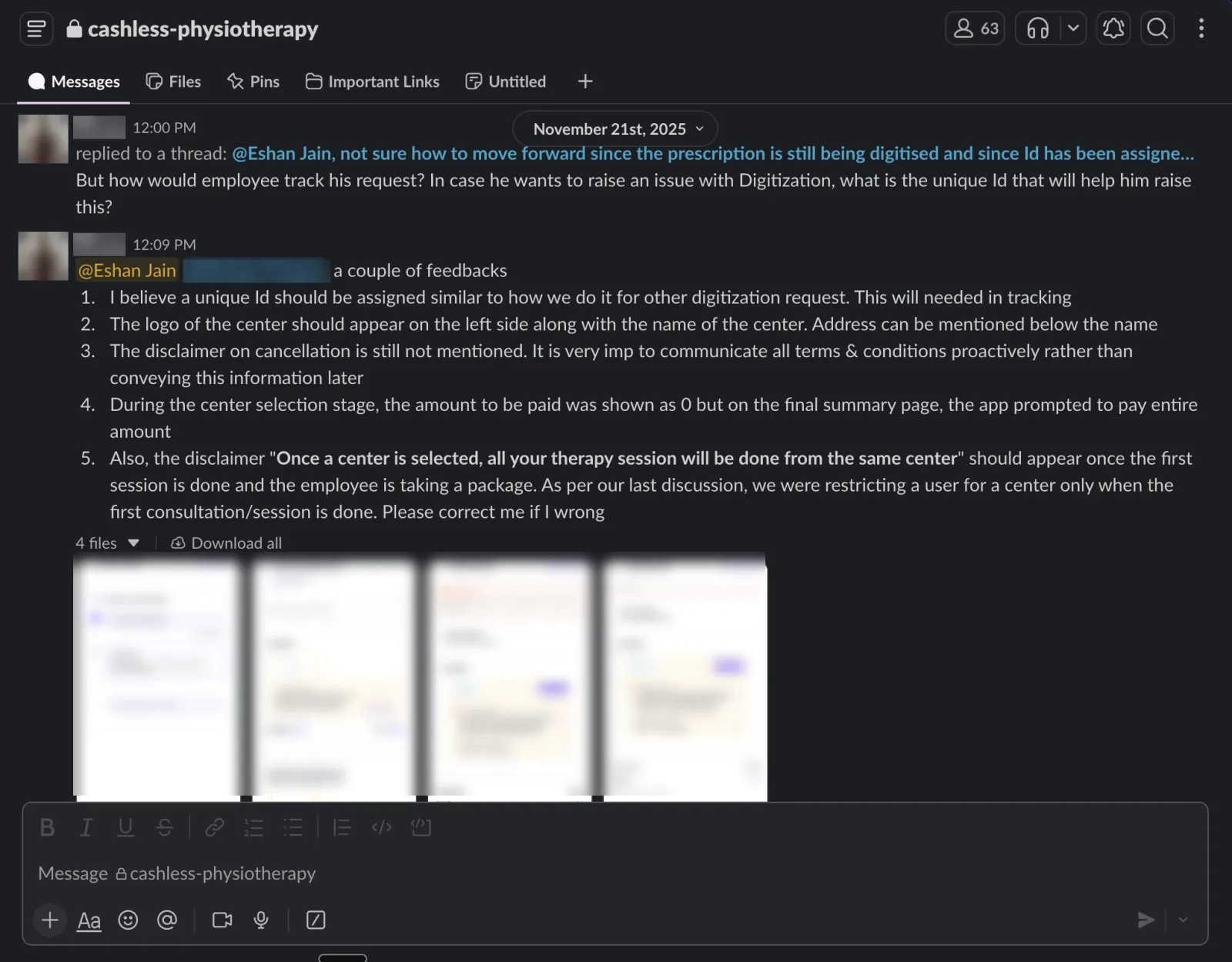
Ops testing surfaced real problems: a centre's logo missing, no cancellation disclaimer, the amount due showing as zero. The job shifted from designing the system to defending the quality bar.
07Going live
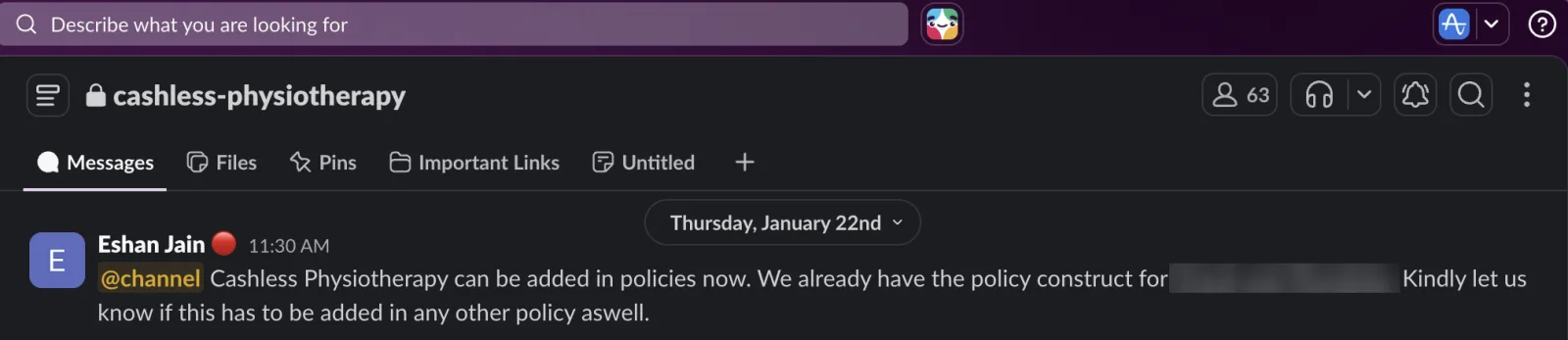
Live on Android and iOS across several large corporate and insurance sponsors in early 2026. Web followed once the last bugs were fixed.
The numbers:
- ₹2 Cr first-year order book, won with ICICI Lombard, Oracle and Mondelez.
- 42% lower insurer claim costs than reimbursement, because every visit is verified by OTP and cannot be faked.
- 95% verified attendance and 70% session completion in the pilot, from A/B testing two booking journeys.
- 20 to 40% below-market pricing that still works, from modelling a 27% lower cost per physio visit.
- 35% faster centre onboarding and about 30% fewer handoff errors, from five synced dashboards built on low-code ERPNext.
The full story, with every meeting and bug list, is in the essay Building Cashless Physiotherapy from scratch.
08What I took away
- Multi-stakeholder products are a different sport. The user wants simplicity, the insurer wants documentation, the partner wants flexibility, ops wants control.
- Going back to the drawing board can be the process working. The redesign felt like a setback and produced the better product.